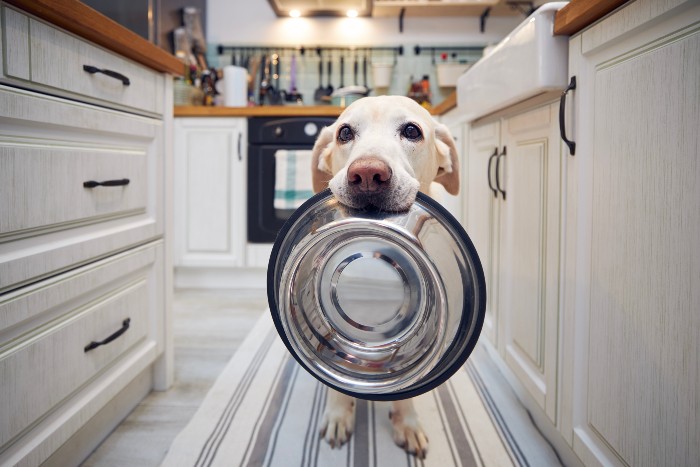
I'm not being holier than thou here. I’ve taken my dog to the vet and, on several occasions, been told, “He needs to lose a few pounds,” or in the case of one particularly blunt clinician, “He’s too fat.”
But whenever it happens, it shocks me into action. A long-term peer-reviewed study found, on average,
that a dog at its ideal weight will live almost two years longer than an overweight dog. I want those extra years with my dog.
And it's our responsibility to keep them in good shape.
But what weight should your dog be?
There are general guidelines for certain breeds but they’re incredibly vague — a bit like the Body Mass Index (BMI) for humans that only uses your height and weight, and totally ignores whether or not you’re built like Arnold Schwarzenegger.
Dogs, like people, come in various shapes and sizes, even within breeds. So how did
those vets know my dog needed to drop some weight?
Well, vets use a more detailed and vastly more accurate method called the Body Condition System (BCS). There are two systems: the U.S. one scores 1-9, the European one 1-5. Both work.
You can read about the BCS and see how the pros gauge your dog’s weight here. It’s something you can easily do at home.
Then you can take steps to get their weight ‘just
right’ — which, going by my dog's reaction to his reduced portions, aren't always easy.
Remember, we have plenty of Best Dog Food lists, which might help you find the right food for your dog. There are breed-specific lists, the Best Dog Foods for Weight Loss, the Best Dog Foods for Picky Eaters, and much more.
We’re trying to update these lists more frequently now so check them regularly. And please remember, if a dog food you use isn’t on a list, that doesn’t mean it’s no good — you can always search for its individual review.
I hope that helps. I’m off to try to reach my ideal weight…